
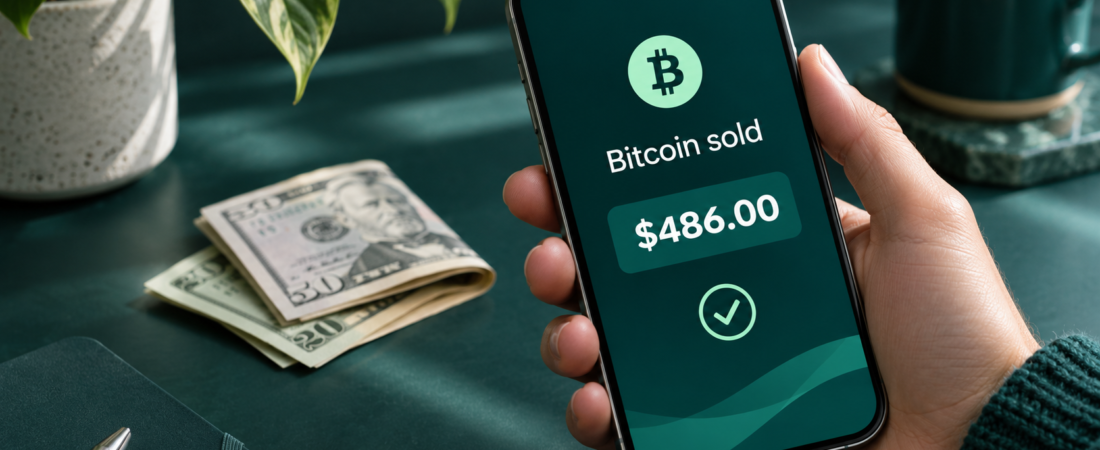
To cash out Bitcoin, sell BTC for the currency you want to receive, then withdraw the proceeds to a bank account or eligible debit card. If your bitcoin is in a personal wallet, first find a service that accepts your BTC and can pay you where you live. For banknotes, look for a Bitcoin ATM that explicitly offers a sell function.
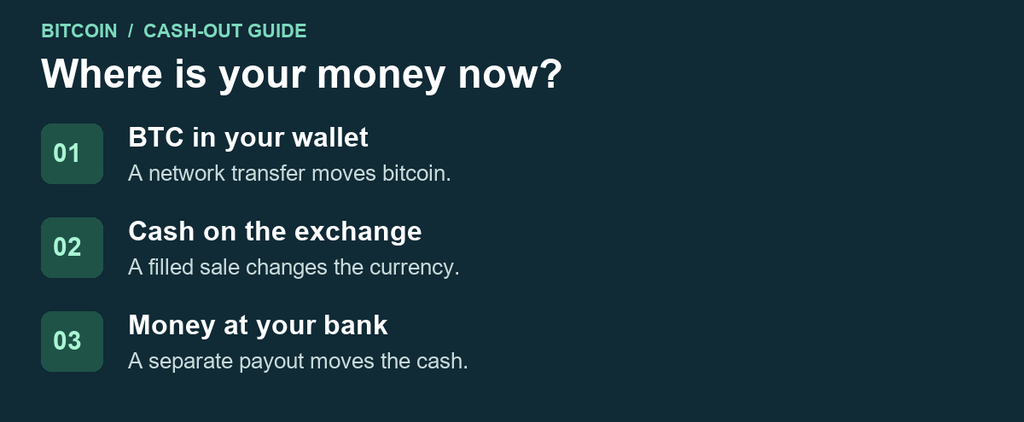
Start with the destination. If you need $500 in your checking account for a bill, the number that matters is the deposit after fees. A wallet showing $500 worth of bitcoin tells you what your coins are worth at its reference price. It cannot tell you what a buyer will pay, what the transfer will cost or when your bank will post it.
Which Bitcoin cash-out method fits your situation?
Compare routes using the same amount of BTC and the same payout currency. A service can accept your coins even when its banking partner cannot send money to your account. Check the withdrawal options while signed in, before sending funds.
| Route | What you receive | Check before selling |
| Exchange sale + bank transfer | Deposit in your bank account | Currency, payout fee and bank eligibility |
| Wallet sell service | Payout from a third-party provider | Final quote and provider identity |
| Peer-to-peer sale | Payment from the buyer | Escrow rules and payment reversibility |
| Two-way Bitcoin ATM | Physical banknotes | Sell function, cash limit and redemption process |
A wallet with a Sell button can save you a transfer between apps. Open the quote to see who buys the BTC, who handles the payout and which company issues the receipt. Those names matter if the wallet shows that your bitcoin left but the payment provider still needs information from you.
How to sell Bitcoin and withdraw the money
1. Check the bank route before moving BTC
Sign in through the exchange’s official app or website. Open the cash withdrawal screen, choose your currency and look for your bank transfer method. Check the minimum, the maximum, any identity checks and the account-holder requirements. Someone selling a small leftover balance can clear the trading minimum yet still fall short of the withdrawal minimum after fees.
If your bank account is in euros, look at the EUR payout first. A dollar quote can look better until you factor in your bank’s currency conversion. If the exchange asks you to verify a bank account, complete that step early. Finding out that an account is ineligible after you sell leaves you holding cash on the platform while you arrange another route.
2. Deposit bitcoin if it is in your own wallet
Open the receiving service’s BTC deposit screen and check the networks it accepts. A Bitcoin on-chain address and a Lightning invoice use different payment instructions. Choose a method supported at both ends, copy the destination from your own signed-in account and check it again in the sending wallet before confirming. Your wallet’s recovery phrase is never part of a deposit.
For an unfamiliar destination, consider a small test that exceeds the receiving service’s deposit minimum. Check the fee first because a second transfer has a cost of its own. After sending, save the transaction ID. For an on-chain transfer, that ID lets you distinguish a transaction waiting for confirmation from one that has confirmed but has yet to appear in your exchange balance. Skip the deposit entirely if the BTC is already available to sell on the platform.
3. Review the price and the currency you will receive
Choose BTC as the asset to sell. Enter the amount, then check the destination balance on the preview. USD and EUR are cash currencies. USDC and USDT are crypto assets. If the preview says you will receive a stablecoin, check what a further conversion to your bank currency would cost.
An instant-sale quote is convenient when you want to see the proceeds before accepting. On an order book, a market order takes available bids and can fill at several prices. A sell limit order sets the lowest price you will accept, but it can remain open or fill only in part. If you need the cash by a particular date, check how much BTC actually sold before counting on the proceeds.
4. Withdraw the available cash
Open the cash balance, select the withdrawal method, and verify the destination account and amount. On Coinbase, for example, selling BTC credits the selected balance. Cashing out that balance is a separate action. Check the available-to-withdraw figure, especially if the account shows a hold from a recent deposit.
Save the payout reference and expected arrival date. For a first withdrawal, check the actual bank entry against the quote before repeating the transaction with a larger amount. If the amount differs, the sale receipt, payout confirmation and bank entry show where to look for a fee or currency conversion.
What does it cost to convert Bitcoin to cash?
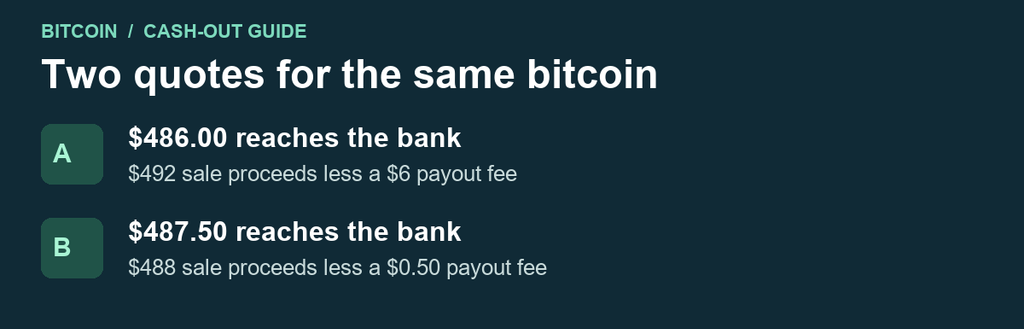
Ask two providers one question: “If I sell this exact amount of BTC now, how much will reach this account?” The sale price may already include a spread. If you use the provider’s final sale proceeds as your starting figure, subtracting the spread again counts the same cost twice.
Suppose you already hold BTC on two platforms and can sell the same quantity on either. Quote A shows $492 after trading costs and charges $6 to send the money. Quote B shows $488 after trading costs and charges $0.50 for the payout. A offers the better sale price, but B puts $1.50 more in your bank. These are illustrative quotes in USD, with no network fee or currency conversion.
If your BTC is still in your wallet, repeat the comparison with the transfer cost included. Check whether the wallet adds the network fee to the amount you send or deducts it from that amount. In the latter case, the exchange receives less BTC than you entered. For a small sale, a flat payout fee can matter more than a modest difference in price.
Coinbase, Bybit and Binance: what to check
Coinbase’s sell preview shows the destination for the proceeds. Check that field before accepting, then use the cash-out screen to compare the payment methods available on your account. The figure labelled available to withdraw is particularly useful if your total balance includes a recent deposit.
Bybit publishes a fiat withdrawal FAQ covering bank methods, account restrictions and temporary withdrawal locks. Check the service for your own region and currency before depositing BTC. Access to a trading pair on one version of an exchange does not establish that its banking service can pay your account.
On Binance P2P, another user pays you by the agreed payment method. The platform’s escrow holds the crypto during the order. You are responsible for checking the incoming payment before releasing your coins. If you simply want a platform to send money to your bank, compare its direct fiat withdrawal route separately.
How to turn Bitcoin into cash through a P2P sale
Read the buyer’s payment terms, order limits and time window before opening an order. Keep the conversation and the BTC inside the platform’s trade process. After the buyer marks the order paid, open your banking app independently and find the incoming entry. Match the amount, currency and payer details against the order.
A buyer might send a screenshot showing $450 while your own bank shows no incoming payment. Leave the coins in escrow and use the platform’s dispute process. A screenshot, an email that resembles a bank alert or a promise to pay the remainder later gives you no way to verify the missing funds. Also check whether the chosen payment method permits reversals. Escrow cannot change those banking rules.
Can you get banknotes from a Bitcoin ATM?
Some machines let you sell BTC and collect physical cash. Many only sell crypto to customers. Use the operator’s own locator to confirm that the specific machine offers cash withdrawals, then check the identification requirement, transaction limits and opening hours before making the trip.
At the machine, read the cash quote before sending anything. Check whether you need to wait for confirmations or return with a redemption code. Keep the receipt until you have collected and counted the notes. If someone on the phone directs you to scan a QR code they supplied, stop. For your own withdrawal, follow the instructions from the machine and its verified operator.
How long does it take to sell Bitcoin and get paid?
A sale on Coinbase can credit a cash balance immediately. A limit order elsewhere can sit open until a buyer meets your price. Neither tells you when the money will reach your bank. If the funds are for a bill, work backward from the due date using the payout estimate on your own account. Check whether that estimate uses business days and whether your bank observes a holiday during the window.
| Last completed step | What to check next |
| Wallet says sent | Find the transaction ID and check the exchange’s confirmation requirement. |
| Exchange shows BTC | Look for an open or partially filled sell order. |
| Sale shows filled | Check available cash and any dated withdrawal hold. |
| Payout shows sent | Check the arrival window, bank details and payment reference. |
If the expected date passes, identify the last completed step before contacting support. A blockchain transaction ID helps the exchange investigate a missing BTC deposit. A bank tracing a fiat payment needs the payout reference instead. Sending the same BTC a second time creates another transfer and leaves the first one unresolved.
Which records should you keep after selling?
Download the trade confirmation while you have the account open. Keep the BTC quantity, execution date, sale currency, gross proceeds, fees and payout reference together. Retain the original purchase records as well. The amount deposited in your bank may combine several sales or reflect a separate withdrawal fee, so it rarely tells the whole story on its own.
For U.S. taxpayers, the IRS explains how to calculate a capital gain or loss on digital assets held for investment using the amount realized and the adjusted basis. Selling the BTC and leaving the dollars on the exchange can still create a reportable disposal. Readers elsewhere should check their own tax authority’s rules, especially if the coins came from mining, business receipts or a gift.
Frequently asked questions
Can I cash out Bitcoin directly to my bank account?
Yes, if a provider supports both the sale and a payout to your account. A regular bank account number cannot receive an on-chain BTC transfer. Use the provider’s BTC deposit instructions for the crypto leg and enter your bank details only in the fiat withdrawal section.
Can I cash out Bitcoin to a credit card?
Check which cards the provider lists for payouts. A card that works for purchases may be ineligible to receive money. Where a provider offers an eligible debit-card payout, compare its fee and arrival estimate with a bank transfer before confirming.
Do I have to sell a whole bitcoin?
You can sell a fraction. Check both the minimum trade size and the minimum withdrawal for your chosen method. For a small balance, preview the entire transaction through to the payout fee so you know how much money you can actually collect.
Should I cash out all my bitcoin at once?
Start with what the money is for. If you need a specific amount for an expense, preview a partial sale that covers it after fees. If you are choosing whether to keep an investment, that is a separate decision involving your exposure to price changes, possible taxes and when you expect to need the money.
Why is my cash balance higher than the amount I can withdraw?
Open the account’s balance details and look for a dated hold, an open order or a pending payment. If the exchange gives a release date, save it with your receipt. If the reason is unclear, contact support through the signed-in app with the transaction reference before initiating another sale.